
Denture maintenance laboratory
Restore the fit of a suitable denture as tissues change
A laboratory reline renews the tissue-fitting surface of an existing removable denture. Smart Smile works from your clinical prescription and impression to support a closer adaptation, careful border finish and a practical return to your clinic.
For dental clinics, dentists and their practice teams.
Suitability assessed first
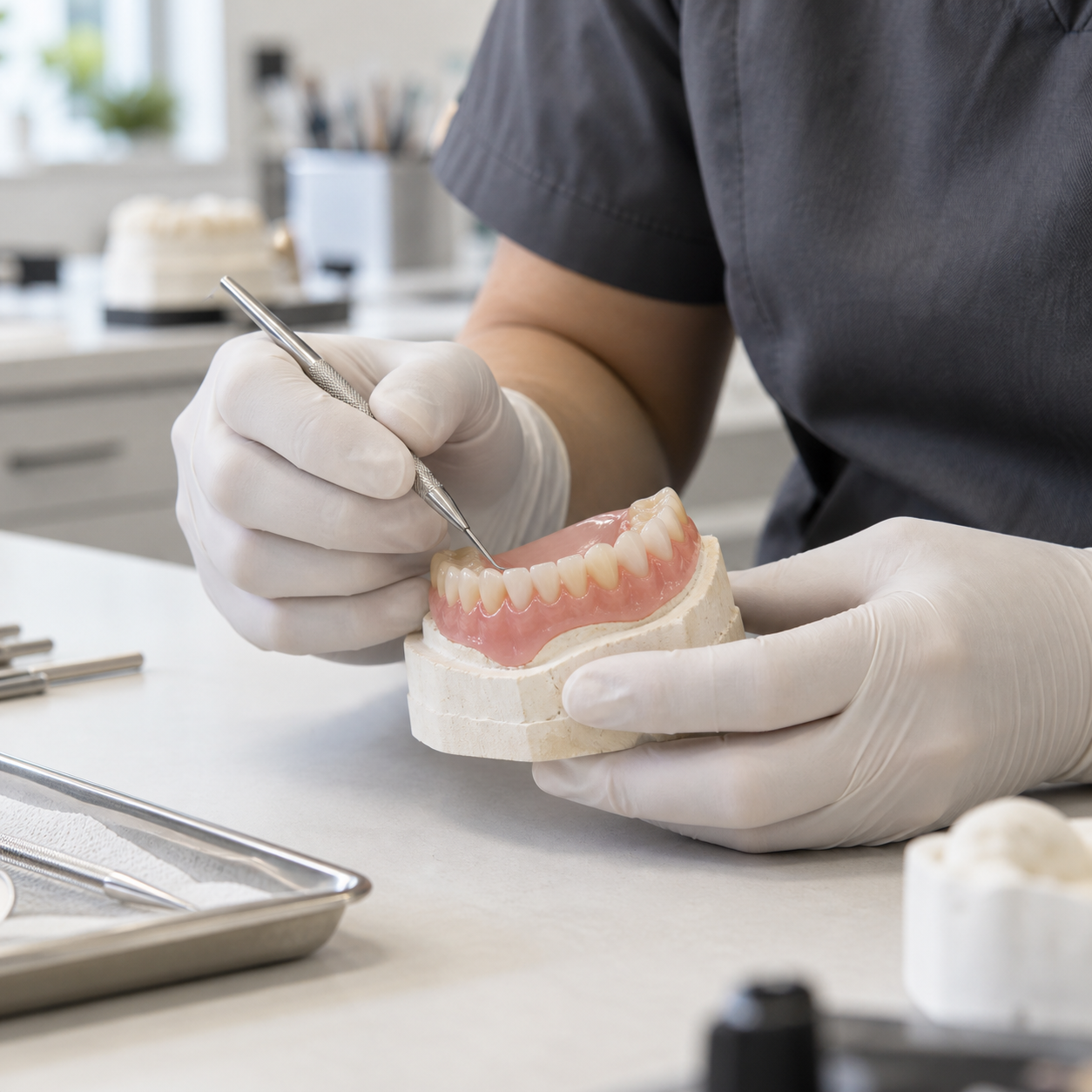
We consider the appliance material, condition, occlusion and supplied records before laboratory work proceeds.
Prescription-led processing
The reline is processed around the clinical impression and instructions provided by your practice.
Communication when it matters
If the denture or records raise a question, we contact the clinic before committing the case to the next stage.
A considered maintenance option
Relining begins with the existing denture, not just the impression
Changes to the supporting tissues can reduce adaptation over time, but a reline is only useful when the remaining appliance is appropriate to retain. Reviewing the whole case helps your practice choose a sound laboratory pathway.
When a reline may be considered
A reline may be discussed when tissue adaptation has changed but the denture teeth, base, vertical relationship and overall design remain suitable for continued clinical use.
What the laboratory reviews
We look at base integrity, available reline space, impression detail, border capture, tooth position and the relationship between the denture and supplied records.
When another approach may suit
Significant wear, fracture, poor tooth arrangement, limited restorative space or an unsuitable jaw relationship may indicate that repair, rebasing or replacement should be considered clinically.
Records for a predictable handover
Clear clinical records give the laboratory a reliable starting point
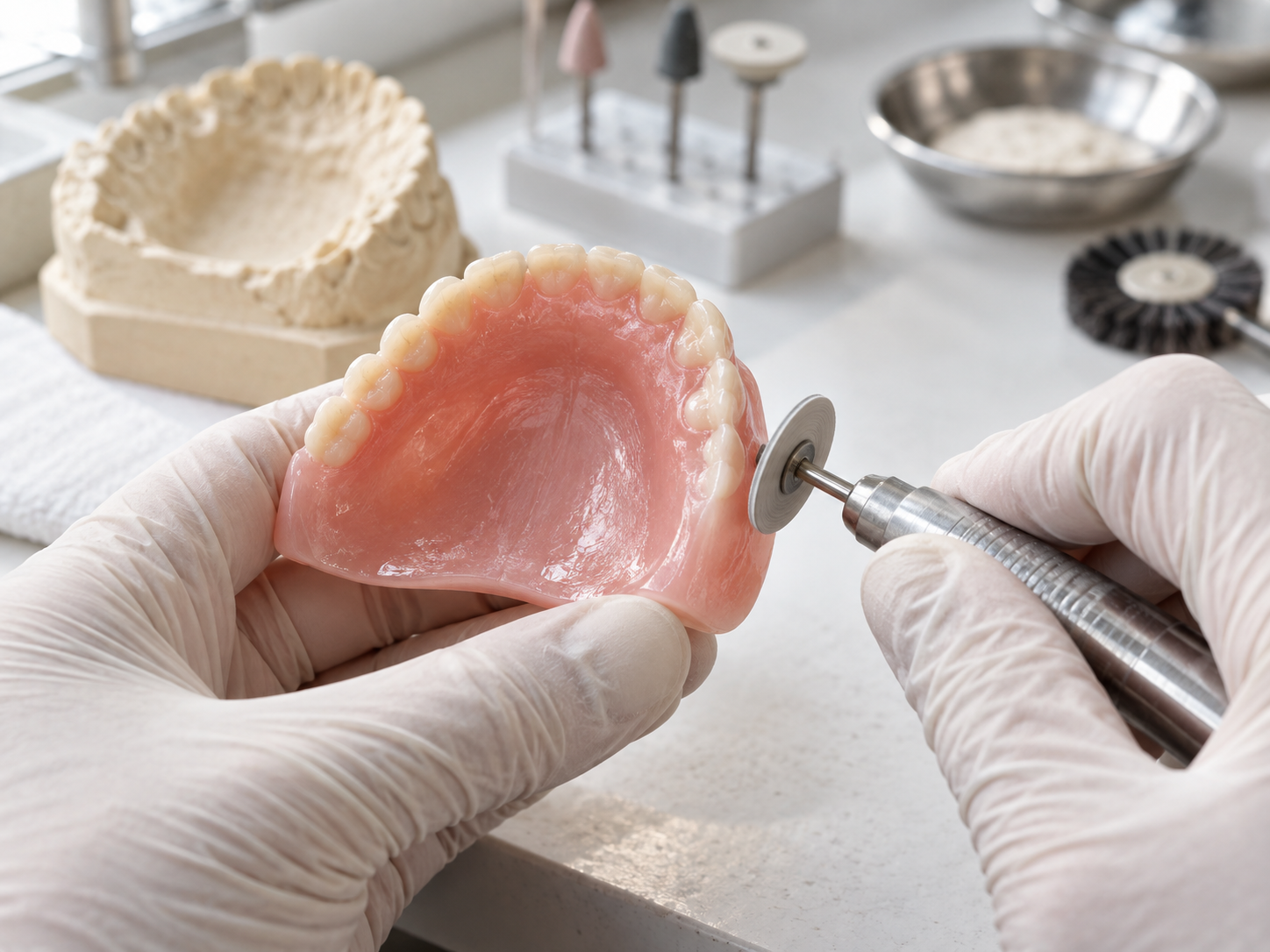
The reline surface can only reproduce the information captured clinically. Accurate records and a clear prescription help the laboratory preserve intended relationships while processing, finishing and returning the appliance.
For best outcomes we require:
- The cleaned and disinfected denture, identified for the case
- A clinically accepted reline impression supported by the denture
- Opposing model and bite relationship when required
- Instructions for material, borders, relief areas and any specific design concern
- Relevant case timing and requested return arrangements
Clinic-to-laboratory workflow
From clinical impression to a finished reline
01
Assess and record clinically
Your practice evaluates the denture, captures the prescribed impression and sends the appliance with complete instructions and any supporting records.
02
We process and finish
The laboratory checks the case, replaces the impression material with the prescribed reline material, then refines the fitting surface and borders.
03
Receive and assess the fit
Your clinic receives the relined denture for clinical evaluation, adjustment where required and appropriate patient instructions.
Planning a denture reline appointment?
Talk with Smart Smile about the appliance, required records and laboratory timing before the case is sent.
